
A Museum of Failures at the Edge of the Forest
When I see a beautiful story, rich with wisdom, all of the cells in my body conspire to capture it. Such inspiration struck me on my summer vacation.
Please enjoy the story of Valerie Piedmont, and her collection of sculptures at the edge of the forest. Shot on 35mm film by yours truly.
“How long does the forest go on for?” I asked the grandmother across the kitchen table from me as she poured lavender tea into a pair of terracotta mugs.
“Forever, really.” She didn't explain further.
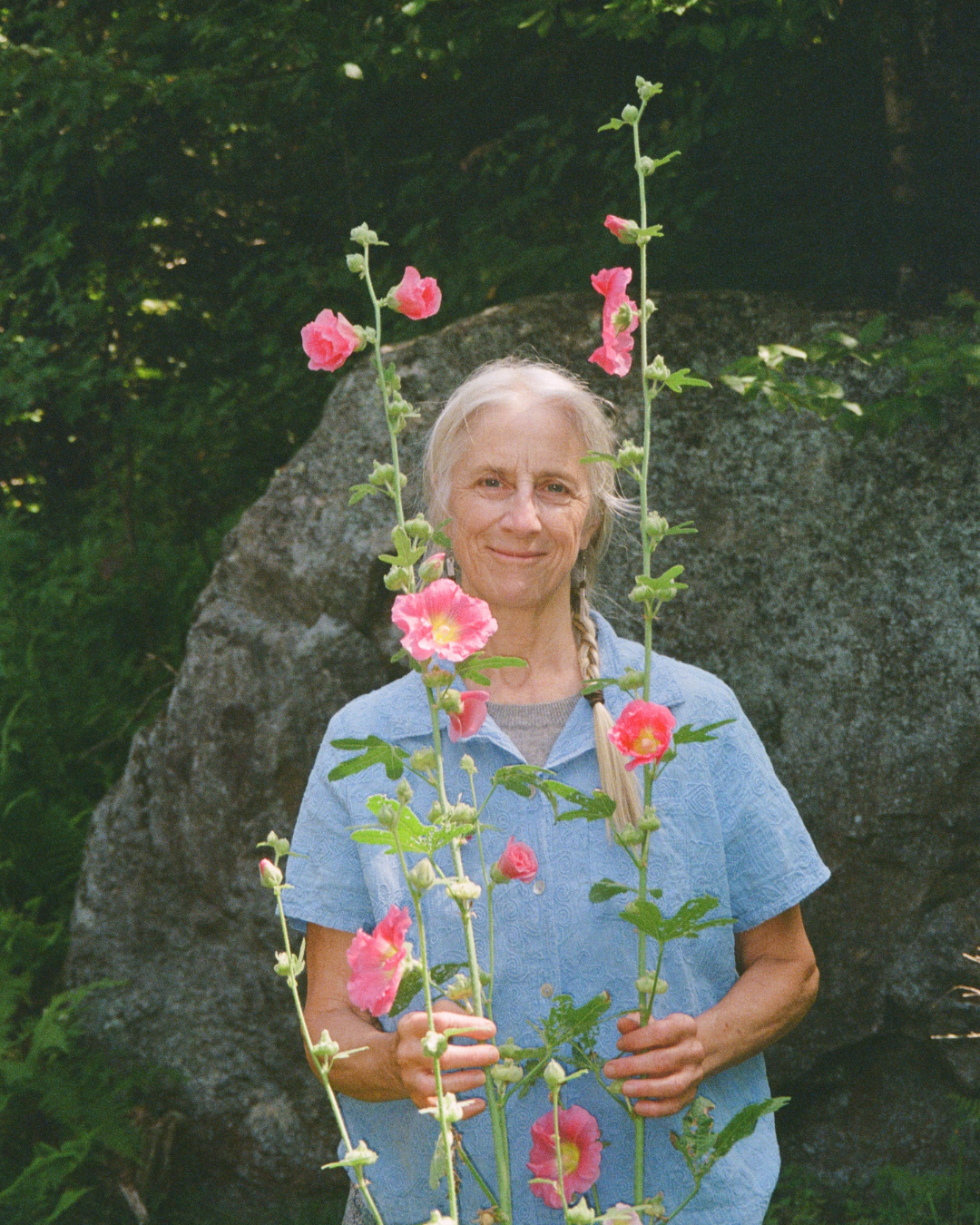
I'd spent all of August stuck in a mental rut, made even stickier by the humid height of Texas' heat. Like clay cracking in the sun, the end of summer exposed an old pattern of self-criticism I thought I'd outgrown. By the time I reached New Hampshire, I was finally seeing how sharply I'd been turning against myself.
A gust of grace carried me to the off-grid, solar-powered, bed-and-breakfast home of Valerie Piedmont.
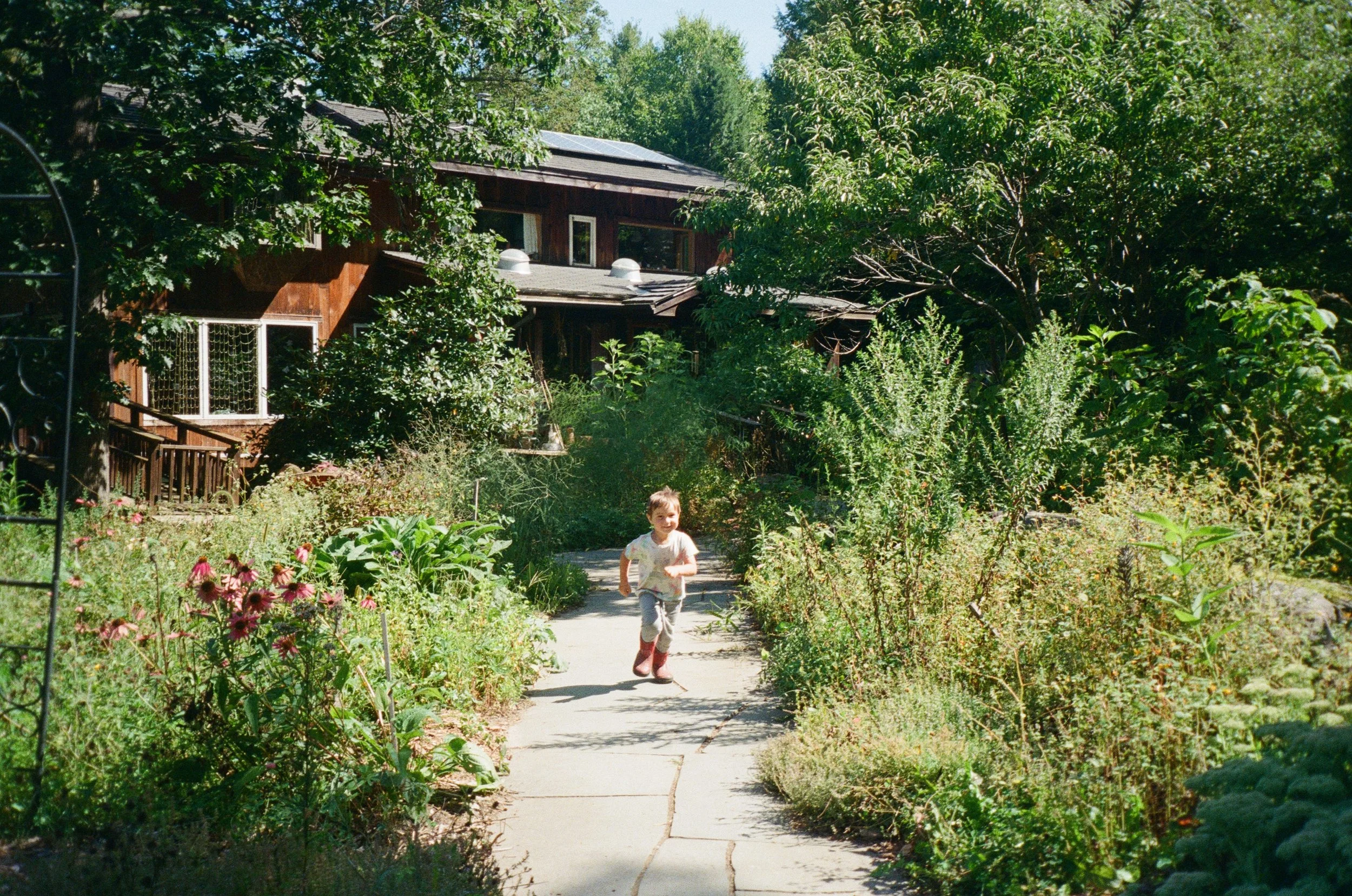
Her abstractly designed garden of flowers, herbs, and late-summer squash blurred the lines between the Emerson Brook Forest and the warm wooden walls of her house.
“It started as a one-room house many decades ago,” she said. “Then, I built a room at a time whenever I had the money and it wasn't snowing.”
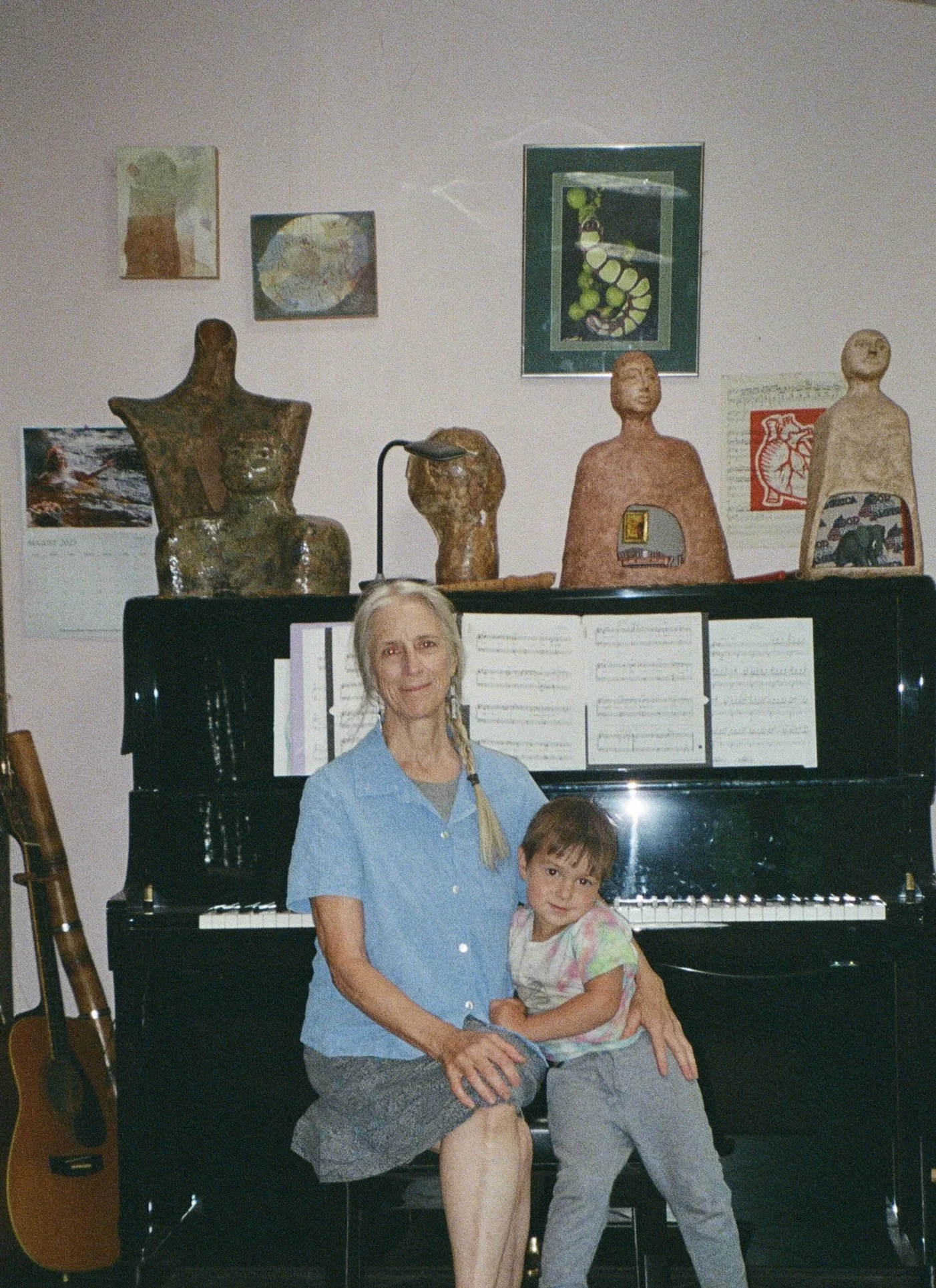
In the sunroom, a Kawai piano remained an open invitation. The variety of volumes found on her overflowing bookshelves revealed a curious mind that transcended category.
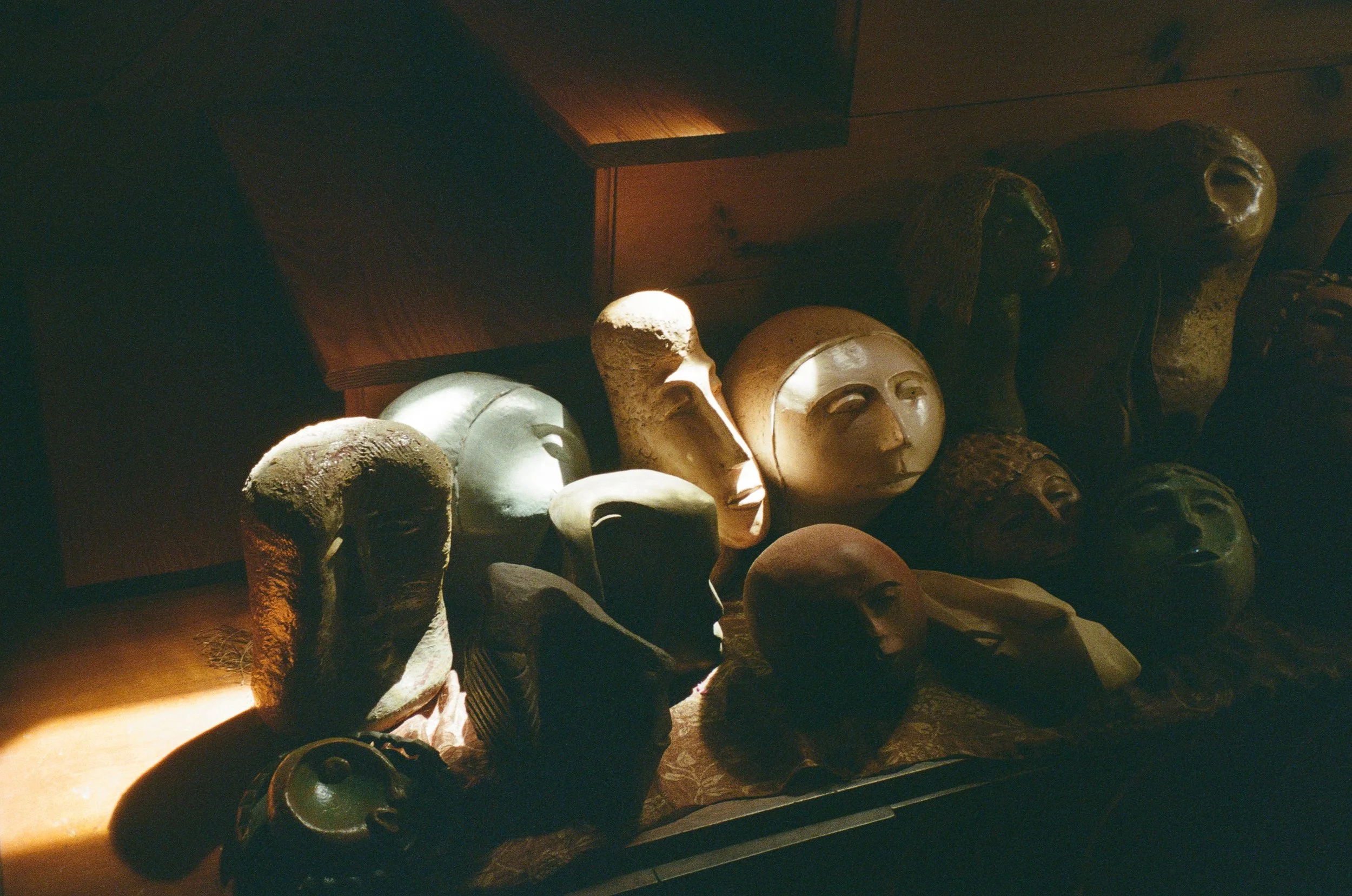
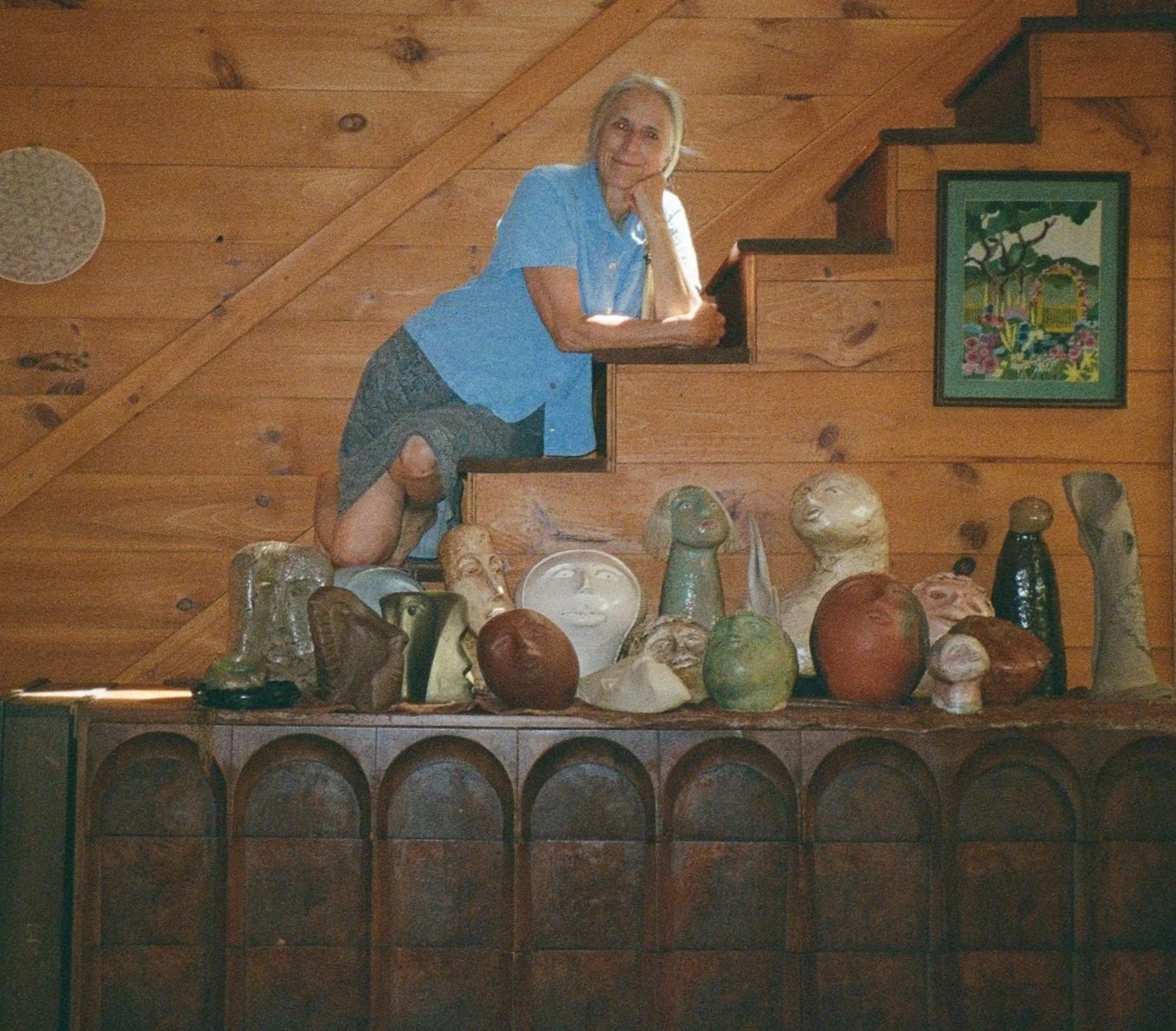
Nearly every surface—windowsills, credenzas, the front patio—was inhabited by striking sculptures that felt both primitive and modern; evasive of solid form yet unmistakably feminine.
Over tea that evening, Valerie told me about coming of age amidst the consciousness revolution of the 60s and 70s. Her “Summer of Love” bingo card was nearly full.
She went to Woodstock at 16, once chained herself to a fence to protest an industrial eco-disaster, and hitchhiked across the country to make it to Rainbow Family Gatherings (Like the Sun at Midday readers know what I'm talking about).
While many flower children let their idealism fade with adulthood, Valerie never released her vision of a harmonious world. She built her life there in the forest in devotion to the principles she believed could shape a world where all beings thrive.
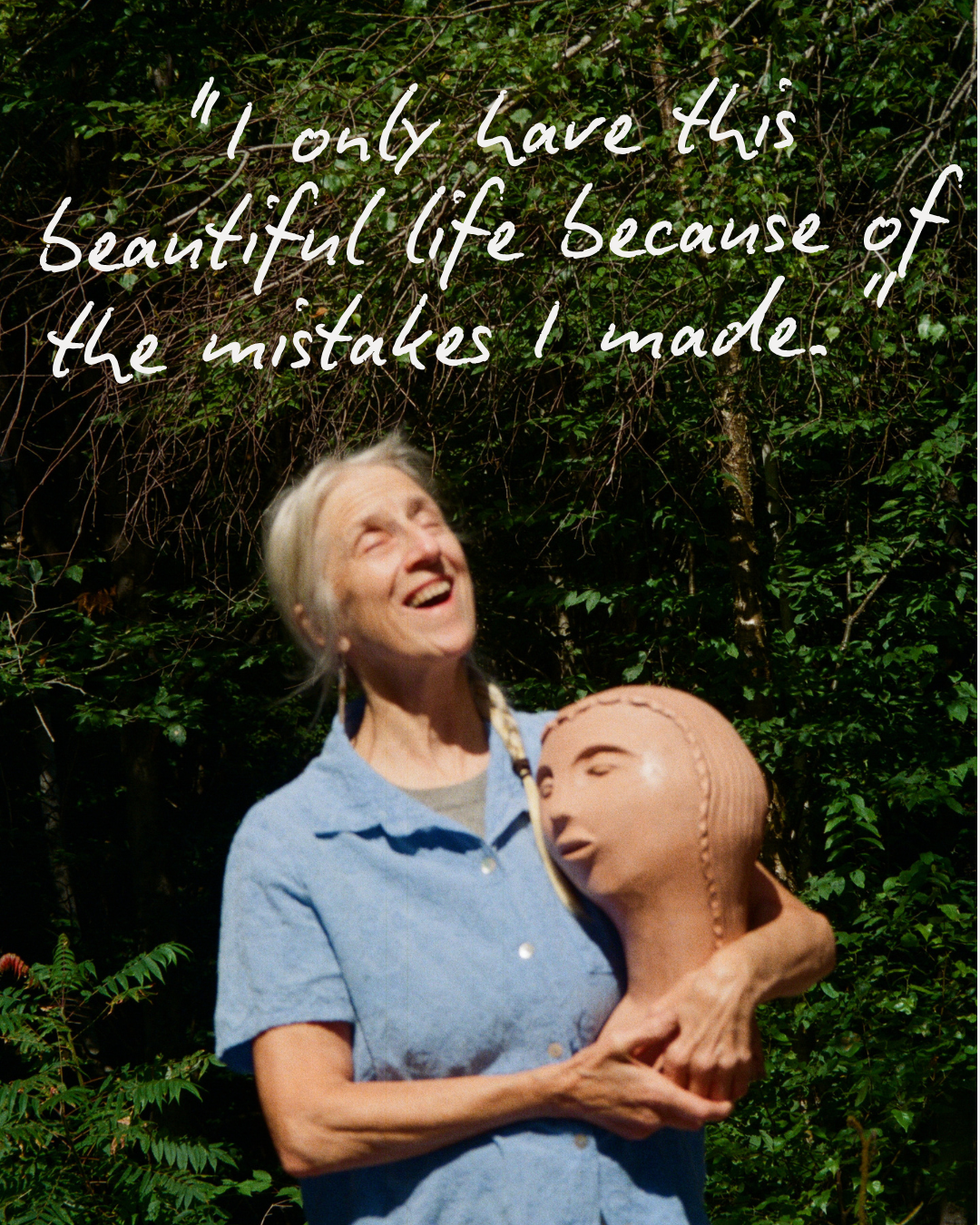
The many stories she shared that evening carried the texture of a life fully lived: detours, heartbreaks, failures, and grit.
“I only have this beautiful life because of the mistakes I made,” she said.
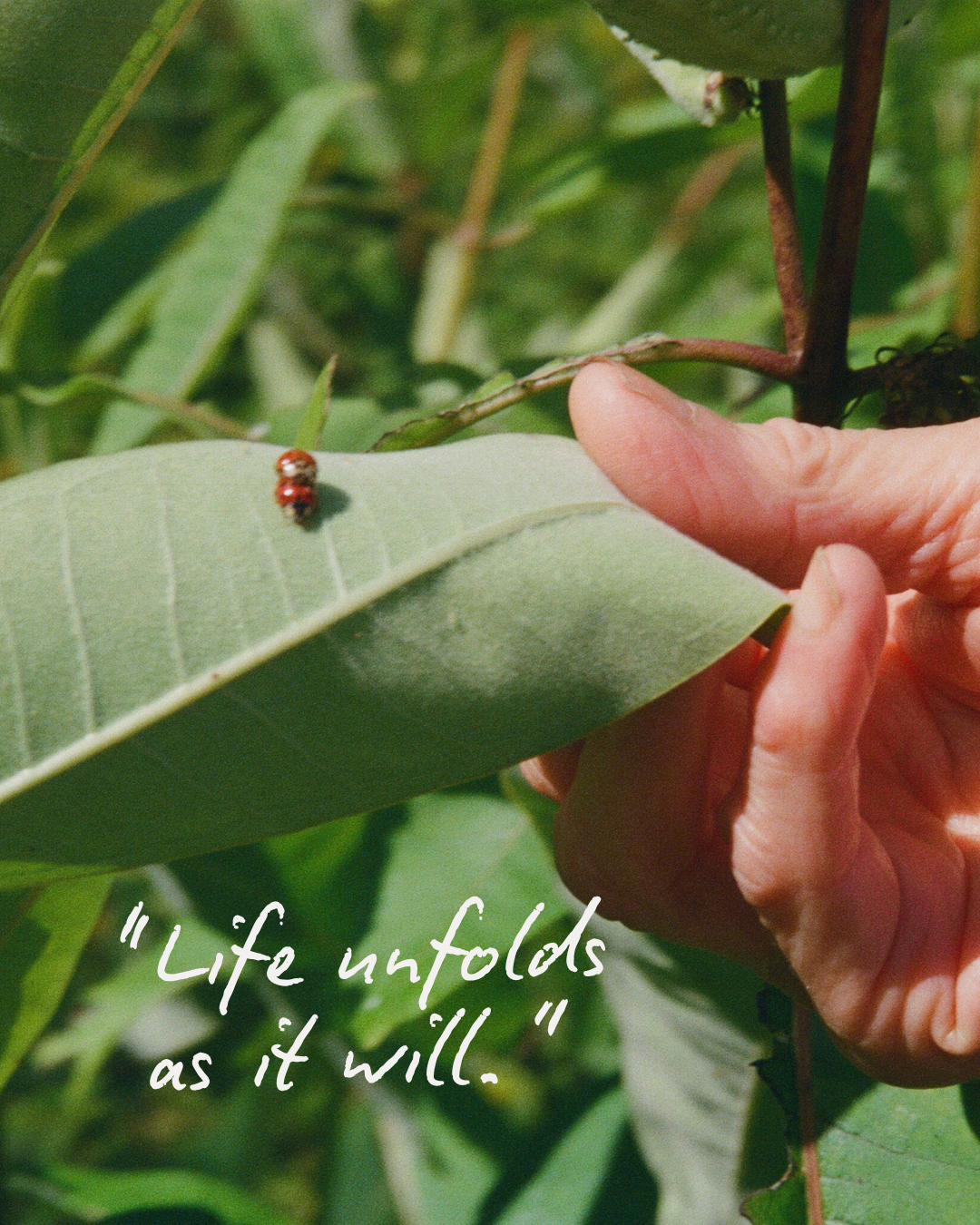
“We're co-creators in our universes. Life unfolds as it will. None of us are shaping our world alone. The plans that dissolve and the choices that don't work out aren't failures; they're part of the choreography with the larger intelligence we're partnered with.”
My shoulders dropped and an exhale escaped my lungs. These words softened the pressure I'd been putting on myself—to get it right, to control the outcome.
“And that bigger plan extends way beyond our little lives," she went on. "We live on top of the creations and mistakes of everyone who came before us. I am part of a continuum that keeps me connected to my ancestors. We're standing on their shoulders, seeing a little farther each generation.”
It turned out, Valerie inherited more from her ancestors than the incremental progress of consciousness.
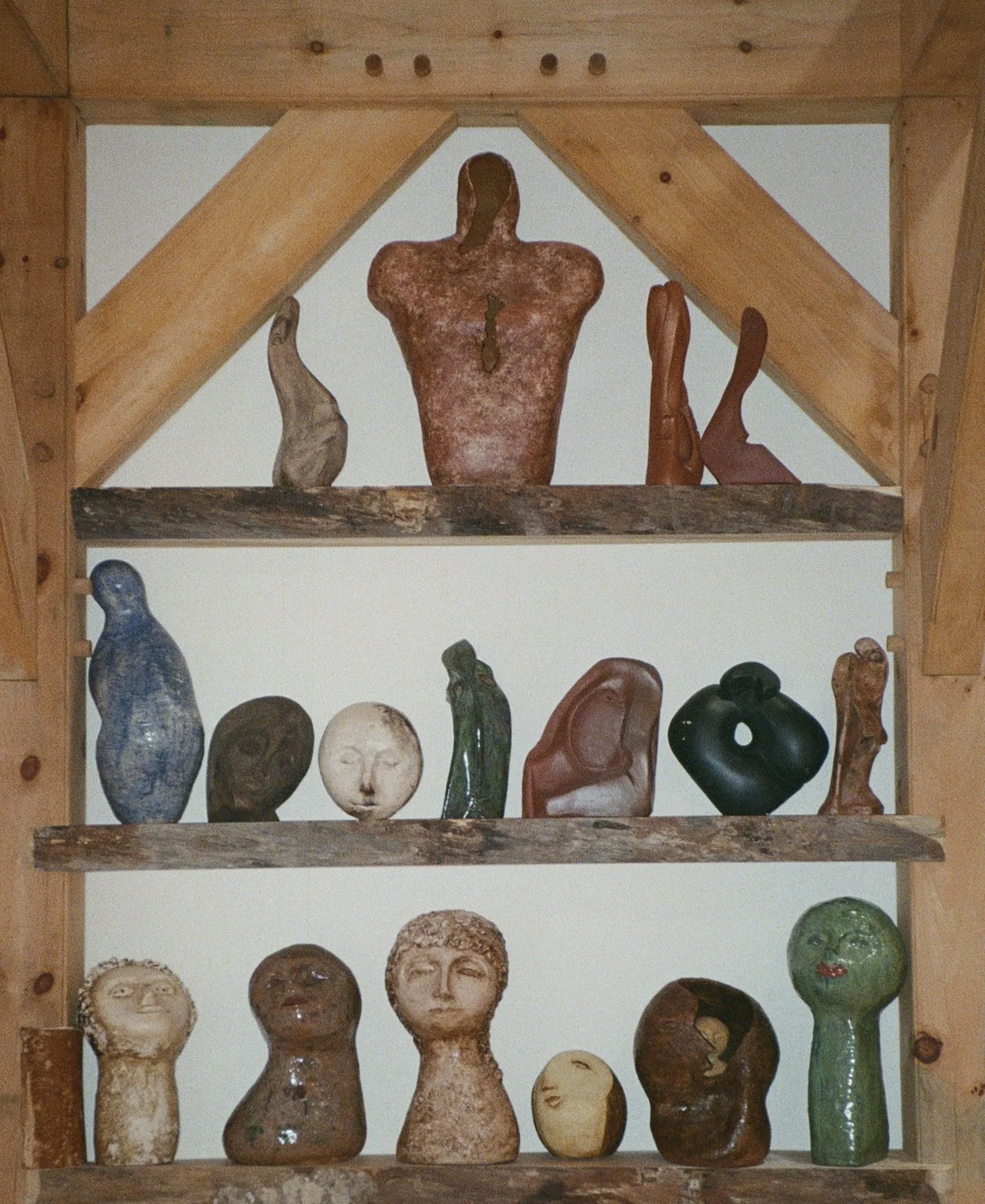
I learned that the collection of sculptures scattered throughout her home came from the late artist Susan O'Hara, Valerie's mother-in-law.
“I was always completely amazed by her pieces,” she said. “Sue told me how she would work the clay until it told her what it wanted to be. The suggestion of a face or a woman's body nearly always appeared, no matter how abstract. It's a perfect example of how artists are never single entities. They're in conversation with something larger.”
When Valerie's daughter was young, she once knocked over a sculpture while running around her grandmother's house.
“It shattered,” Valerie remembered, “and Sue just scooped up the pieces and tossed it in the trash without hesitation or even an ounce of disappointment before sitting back down at her work table. I hovered for a moment, and lifted the biggest piece out of the garbage.”
Valerie cradled the salvaged sculpture in her arms. “In the moment it broke,” she said, “it became more precious to me.”
After that, each time she visited Sue she asked, “What do you have that you don't want?” Over the years she built a collection of hundreds of sculptures that had fallen short in the artist's eyes or sustained a few cracks. “To me,” she said, “every one of them was special.”
Valerie's entire collection existed because she was willing to see beauty where others saw mistakes.
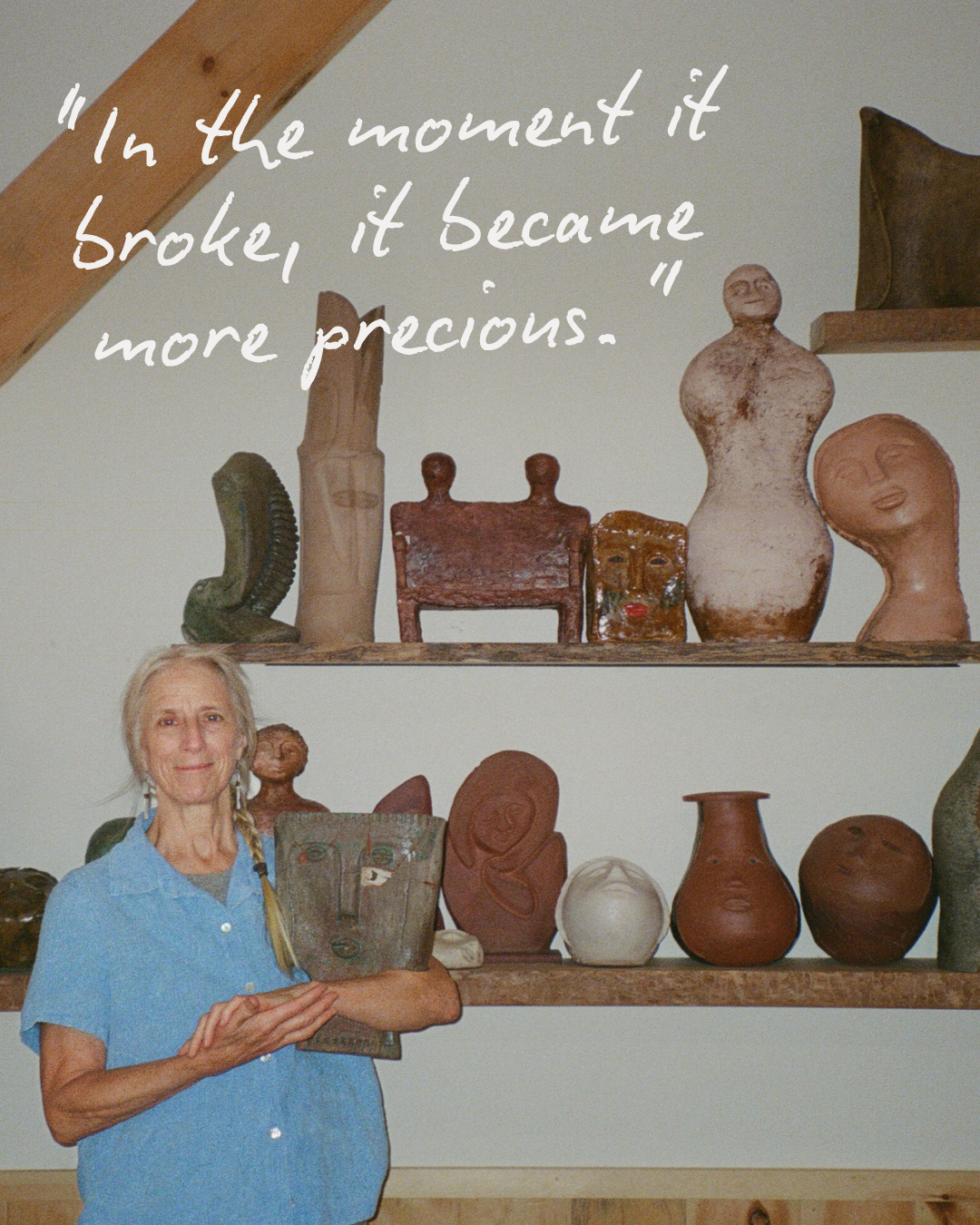
In her home, as in the forest, creation was not rigid or controlled. It was relational—moved by mood, guided by accident, shaped by what emerged rather than what was imposed. Sitting with her made me recognize how quickly I condemned my own imperfections, and how different life could feel if I met them with softness, or even adoration, instead.
When co-creating with the divine, it's rarely a linear path.
“I'm more like a pinball game,” she admitted. “But I always get where I'm going.” Her acceptance of twists and setbacks seemed to generate resilience.
That resilience became essential when she lost the 2,000 feet of wheelchair-accessible trails she had built through a nonprofit after a draining legal battle with a group seeking to commercialize that part of the forest.
Rather than harden, she moved the nonprofit's work farther down the same gravel road. Embracing the fresh start, she built a bright, wood-beamed gallery to house Sue's sculptures, gather community, and serve as an outpost for stewardship of Emerson Brook Forest.
“We're like desert flowers," Valerie said. "If it rains we'll bloom. If it doesn't rain we'll settle in the ground and wait for our time. We're not gonna die, we just won't make progress—except what happens internally. I know that's the wrong analogy for the forest, but it sure works.”
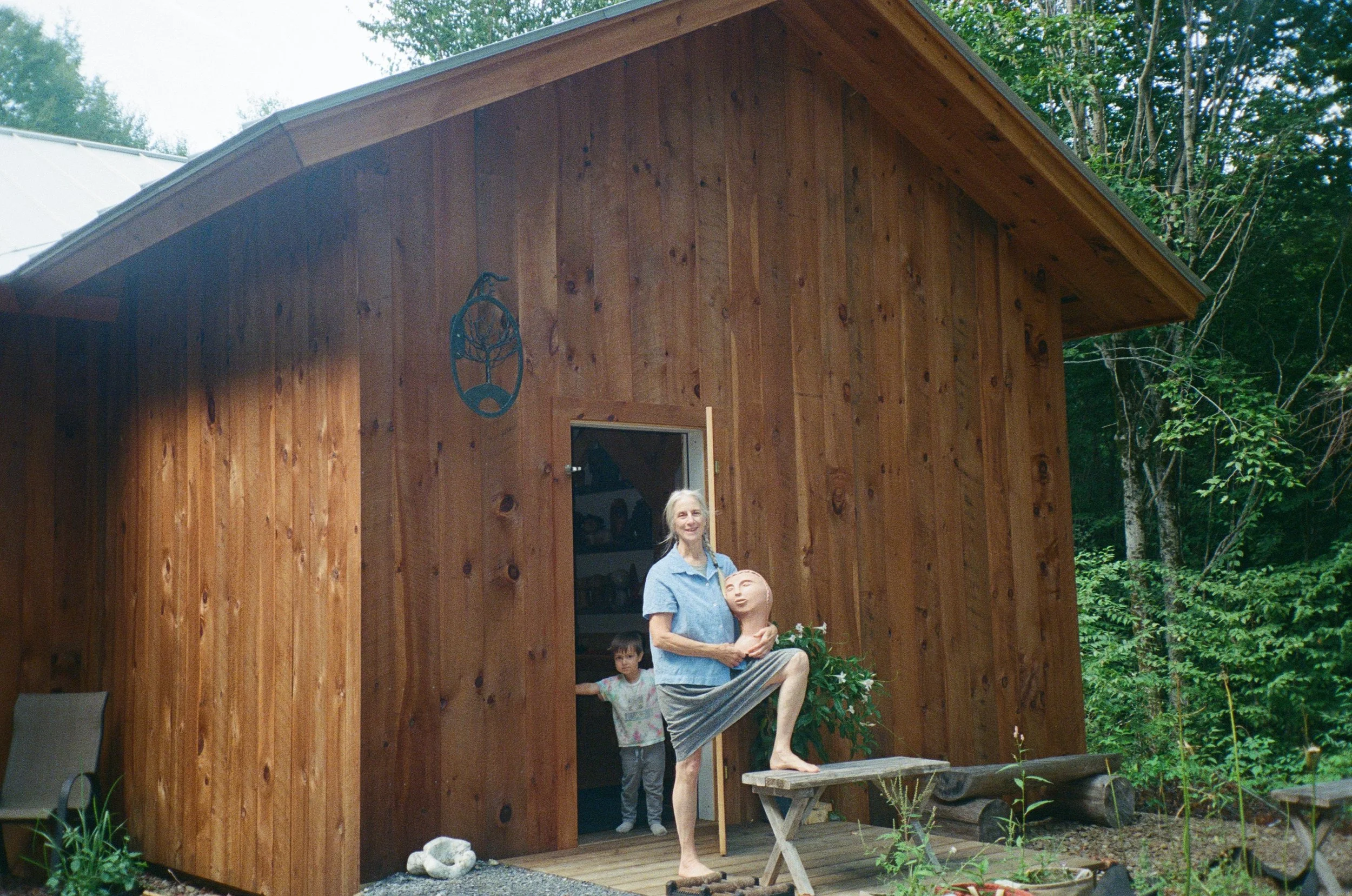
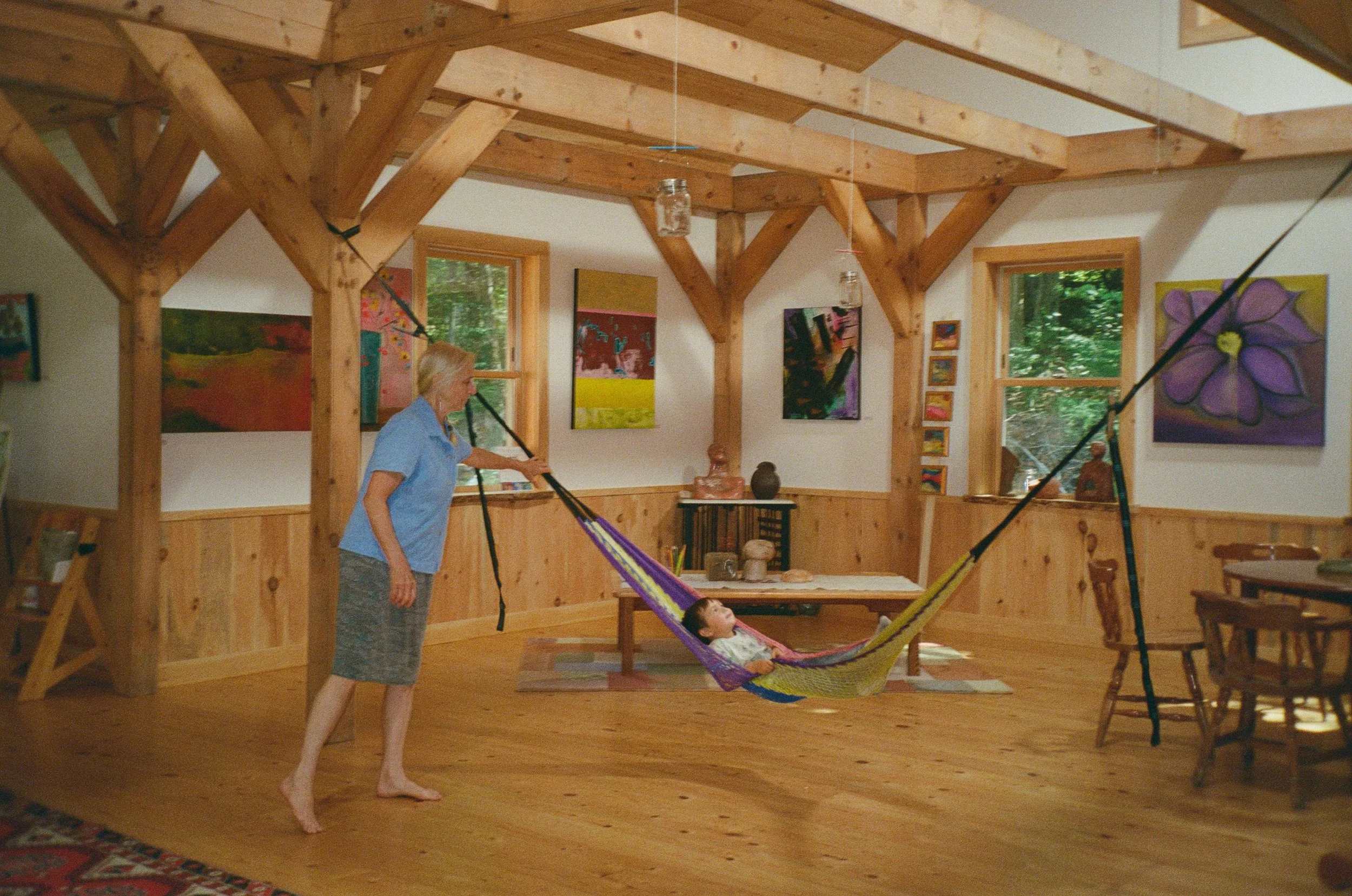
The next morning, Valerie and her grandson took me on a short hike up the road to visit the gallery.
“The first sculpture I brought up here once construction was complete has about 1,000 cracks in it. She lives on her side now,” Valerie said of the sculpture too broken to stand up straight. “She suggests repose. Rest.”
Each visitor is invited to carry a sculpture from Valerie's house up to the gallery—a quiet ritual that lets many hands take part in the slow, shared dance of making she's built into this place.
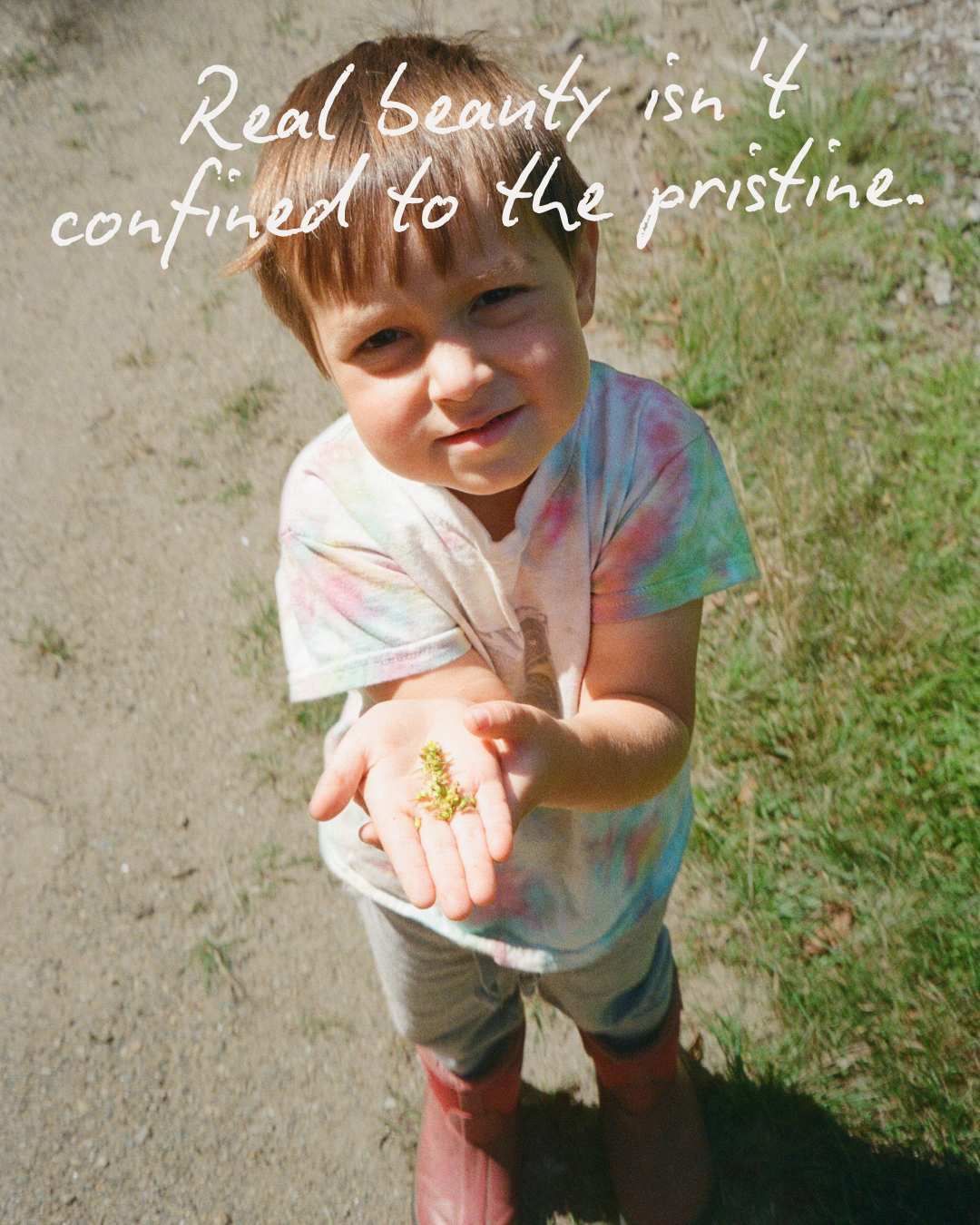
I had been treating imperfections as evidence of failure.
Valerie showed me how to treat mistakes as companions, as sources of beauty, as the very material from which a meaningful life is shaped.
Her home, her art collection, her forest, and her history all demonstrated that real beauty isn't confined to the pristine.
Beauty lives not in the untouched but in the touched; the changed, the softened, the survived.
There's preciousness in the way life marks us up.
Maybe, like Valerie, I'll build a museum in the woods to exhibit my own scratches and rough edges.
Learn more about The Sustainability Project
Valerie's nonprofit promotes a love of nature, environmental stewardship, caring communities, and ways of living that deepen our understanding of the interconnected web of life.
